
The Most Common Mistakes to Avoid as A Producer When Creating Melodies
Across all the different areas producers have to learn, one area consistently stands out as the biggest challenge: creating melodies. Regardless of skill level, this is where many producers struggle the most. And right now, being able to create good-sounding melodies, good-sounding samples, and good-sounding loops is one of the most effective ways to get your foot in the door as a producer.
If your melodies are off, everything built on top of them will suffer.
Below are the most common mistakes producers make when creating melodies—and how to fix them. These issues are crucial. Skip even one, and your melodies will still be messed up. Every section builds on the last, so pay close attention.
Mistake #1: Not Creating a Solid Base
The first and biggest mistake is not creating a solid base.
Your first chord progression needs to be solid. If something sounds weird—or even just a little bit off—adding more elements to your beat will not make it better.
If the foundation sounds bad, everything on top will sound bad.
Think of it like making a pizza. If you start with a cardboard box instead of dough, you can add the best sauce, the best cheese, pepperoni, sausage—whatever you want.
It’s still going to be a pizza made of cardboard.
Melodies work the exact same way.
A Foolproof Method for Creating Solid Chord Progressions
The easiest way to build a strong chord progression is to start with root notes.
Step 1: Choose Root Notes First
Root notes are the bottom notes of your chords. Start by finding a sequence that simply sounds good together.
It doesn’t matter what note you start on.
- Start with one note
- Move to another
- Listen carefully
If it sounds weird, don’t force it. Go back and adjust.
When the root notes flow naturally, that’s your foundation.
If the root notes don’t work on their own, the chords won’t work either.
Step 2: Build the Chords Up
Once the root notes are solid:
- Move the next note up seven semitones
- Then add another note:
- Up two semitones for a minor chord
- Up three semitones for a major chord
A simple rule that works about 90% of the time:
If you start seeing notes lining up, it’s probably going to sound good.
From here, you can adjust the length of each chord. Just make sure there’s some kind of pattern. This adds movement without breaking the foundation.
Step 3: Make the Chords Bigger
If you want the bass and chords to sound fuller:
- Add additional notes
- Go up two or three semitones
- Listen carefully each time
If something sounds bad, undo it and try a different interval.
You can also:
- Experiment with octaves
- Randomize velocities to make things feel more realistic
- Slightly move notes to avoid a robotic feel
Once this base is done, everything else becomes easier.
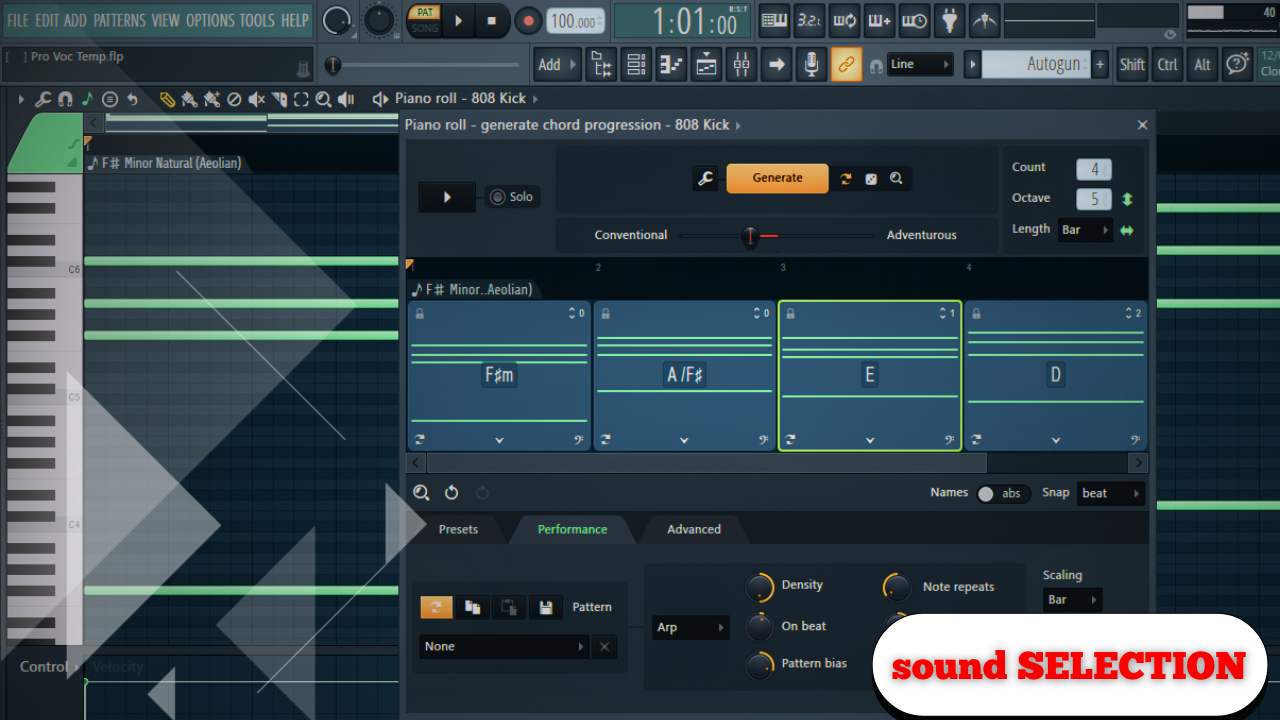
Mistake #2: Poor Sound Selection and Layering
Sound selection is one of the biggest areas where producers mess up.
When layering sounds, you can’t just stack anything together and expect it to work.
Why Using the Same Sound Twice Doesn’t Work
If you layer the same type of sound over itself:
- It becomes muddy
- You introduce phasing
- The melody actually sounds worse
Instead, every added sound should feel like it:
- Fits naturally
- Adds something new
- Feels like part of the original sound—not competing with it
Layering should enhance the sound, not take away from it.
Volume Matters More Than You Think
Sometimes the sound is right—it’s just too loud.
Simply turning a layer down can make it:
- Sit better in the mix
- Feel more natural
- Blend instead of clash
Fixing Frequency Clashes
If two sounds feel muddy together, they’re likely occupying the same frequencies.
Quick fixes include:
- Moving one sound up an octave
- Using EQ to reduce the mid frequencies
- Making space instead of stacking energy
Once the clashing frequencies are reduced, the layers suddenly fit together.
Use Sounds Worth Using
Another overlooked issue is using low-quality sounds.
Many large sound libraries include:
- Hundreds or thousands of presets
- Only a small handful you’ll actually use
High-quality banks and instruments save time and eliminate guesswork.
Good sounds make good melodies easier to create.
Mistake #3: Overdoing Counter Melodies
Counter melodies are important—but overdoing them is a huge mistake.
This becomes especially critical if you want:
- Artists to rap on your beats
- Singers to have creative freedom
Many producers think they need to fill every empty space in the piano roll. You don’t.
More notes don’t equal better melodies.
Simplicity Creates Space
Overcrowded melodies:
- Compete with vocals
- Sound busy
- Leave no room for expression
Simpler counter melodies:
- Feel intentional
- Support the main melody
- Give artists room to perform
Sometimes a texture, a subtle pluck, or a light movement is all you need.
Mistake #4: Not Leveling and EQing Properly
If you don’t do this, your melody will never sound right—no matter how good it is.
The fix is simple and easy.
Step 1: Cut Unnecessary Low End
Before anything else:
- Put every sound on the mixer
- Use an EQ
- Cut the low end around 200 Hz
- Sometimes lower
- Sometimes higher
This leaves room for:
- The bass
- The 808
You can copy this EQ across multiple sounds to save time.
Step 2: Level Everything Correctly
One of the biggest mistakes producers make is volume imbalance.
Common issues include:
- Counter melodies being too loud
- Background sounds overpowering the main idea
A solid starting point:
- Keep most sounds between 12–18 dB
From there:
- Decide which sound is the highlight
- Push it forward slightly
- Pull background elements back
If a counter melody is too loud, it will overpower the artist’s voice.
Everything should have a place:
- Main melody up front
- Counter melodies supporting
- Background elements sitting quietly behind
When sounds are properly leveled and EQ’d, the entire melody suddenly feels cohesive and professional.