
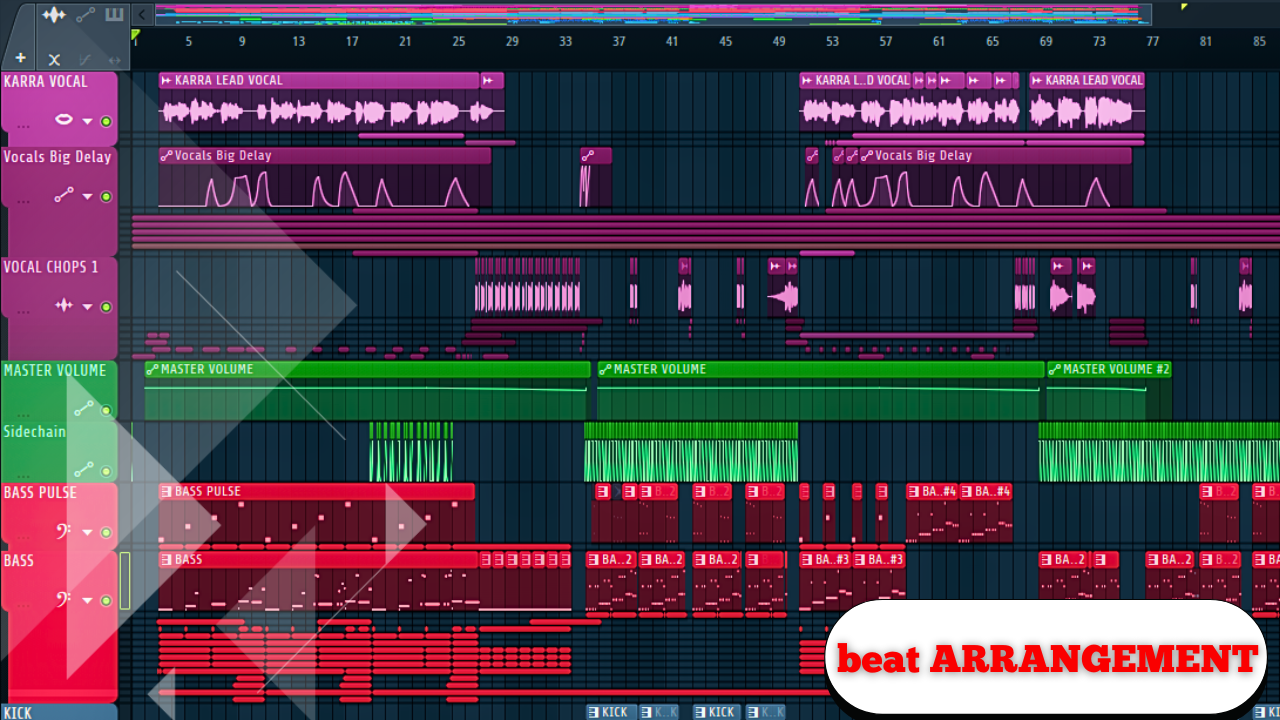
Beat Arrangement MasterClass for FL Studio 2025
Arranging a beat is not genre-dependent. Whether the tempo is slow or fast, melodic or aggressive, the structure follows the same core principles. The goal is simple: keep the listener engaged from the first second to the last.
Every section of a beat serves a purpose. The intro sets the tone. The chorus delivers impact. The verse creates space. The breakdown shifts energy. And the outro provides resolution.
This guide walks through everything you need to know to arrange your beats, step by step, using practical techniques that translate directly into finished, professional-sounding productions.
The Intro
The intro is the deciding factor. It determines whether someone continues listening—or moves on immediately.
Think about how often a random track comes on and you change it within seconds. The same thing happens when artists browse beats or preview beat packs. Most beats won’t be heard all the way through.
“The intro decides whether someone is going to give your beat a chance.”
Two Core Goals of an Effective Intro
1. Peak Curiosity
You need to give the listener a reason to keep listening.
This doesn’t require complexity. A subtle change, a filtered sound, or a gradual reveal can be enough to make the listener wonder what’s coming next.
2. Ease the Listener Into the Beat
The intro should lead naturally into the verse or chorus. Abrupt transitions can throw the listener off and break immersion.
A smooth intro prepares the ear for what’s about to happen.
Introducing Sounds Before They Matter
One effective technique is introducing a sound early that will later play a major role.
For example:
- A primary guitar plays throughout the entire beat
- A secondary instrument appears only in the chorus
Instead of introducing that second sound suddenly, bring it in briefly during the intro. This:
- Familiarizes the listener with the sound
- Makes the chorus feel smoother
- Adds subtle interest early on
This approach keeps the beat cohesive and intentional.
Creating Interest With Simple Filtering
A powerful way to build curiosity is by filtering frequencies.
How It Works
- Apply an EQ to an instrument
- Cut out most of the high frequencies (around 300 Hz)
- Automate the EQ so the filter slowly opens up
- Let the sound fully reveal itself right at the chorus
The result:
- The intro feels muted and restrained
- Energy gradually increases
- The chorus hits cleaner and clearer
This technique is simple, but extremely effective.
Intro Length: Shorter Is Often Better
In many modern songs, intros are short.
- 4 bars
- 8 bars max
- Sometimes no intro at all
High-energy beats benefit from minimal buildup. The faster you reach the main idea, the better.
For high-energy or club-style beats, shorter intros usually work best.
The Pre-Chorus: A Signal Before the Impact
A pre-chorus is optional, but when used correctly, it can be powerful.
What a Pre-Chorus Does
- Acts as an attachment to the chorus
- Signals that the chorus is coming
- Builds anticipation without fully releasing energy
Common Pre-Chorus Elements
- Fewer instruments than the chorus
- Gradual drum introduction
- Hi-hats or claps entering first
- A short, repeated section before the drop
The pre-chorus repeats every time the chorus approaches, creating familiarity and expectation.
The Chorus: The Highlight of the Beat
The chorus is the main event.
This is the section listeners remember most. Everything in the beat is built around making the chorus hit as hard as possible.
“The chorus is what people look forward to.”
Making the Chorus Stand Out
A common approach:
- All main instruments come in at once
- Energy is immediately elevated
To make it feel even bigger:
- Add an extra instrument in the second half
- Introduce the kick later for impact
- Increase hi-hat density
- Add open hats or extra percussion
You don’t need to add more melodies—rhythmic changes alone can make a huge difference.
Creating Contrast Inside the Chorus
Small changes create big impact.
Simple Techniques
- Remove hi-hats in the first half, bring them back later
- Drop all instruments briefly before the second half
- Add a kick or bass pattern variation
These subtle contrasts make the second half feel larger without overwhelming the mix.
The Verse: Space for the Artist
The verse is where you pull things back.
This section should feel open and breathable, giving artists room to perform.
Typical Verse Characteristics
- Fewer instruments
- Reduced drum presence
- Focus on rhythm and groove
A common verse length is 24 bars, which fits modern songwriting well.
Transitioning Into the Verse
To transition smoothly:
- Cut out all drums
- Leave one or two core instruments
- Maintain a sound that plays throughout the beat
Optional elements:
- A vocal sample if it isn’t distracting
- A single clap
- Hi-hats entering after a few bars
As the verse progresses, instruments and drums are slowly reintroduced to build momentum back toward the chorus.
Building Energy Inside the Verse
Effective verse progression includes:
- 808 first, kick later
- Gradual drum layering
- Additional melodic elements entering halfway through
Toward the end of the verse, leaving a brief gap—often around two bars—creates a reset moment that makes the next chorus hit harder.
Chorus Two and Three: Making Each One Bigger
Repeating the same chorus is fine. But small upgrades can elevate the arrangement.
Simple Enhancement Technique
- Convert a melody into audio
- Pitch it up
- EQ out lows and highs
- Lower the volume
- Layer it subtly on top of the chorus
The change is slight—but noticeable.
Other options include:
- Adding a secondary kick
- Switching 808 patterns
- Introducing a short effect exclusive to that chorus
The key is restraint. Small changes are more effective than dramatic ones.
The Breakdown: Changing the Energy
A breakdown shifts the vibe before the final chorus.
This section:
- Creates contrast
- Resets the listener’s ear
- Makes the last chorus feel bigger
How to Build a Breakdown
- Strip everything down
- Introduce a bassline using root notes
- Add a less common sound
- Keep drums out initially
- Slowly reintroduce elements
Start minimal. Then:
- Add a clap
- Bring in a few drums
- Introduce one melodic element
- Transition back into the chorus
“It’s one of the easiest ways to make the final chorus hit harder.”
The Outro: Letting the Beat Breathe
The outro doesn’t need complexity.
Two effective options:
- Repeat the intro concept
- Leave one sound playing on its own
A simple volume fade works well:
- Automate the master volume
- Gradually pull it down
- Let the beat fade naturally
This creates a clean, professional ending without distraction.
Arrangement Is About Control
Every section exists for a reason.
- The intro sparks curiosity
- The chorus delivers payoff
- The verse creates space
- The breakdown shifts perspective
- The outro provides closure
When each part is intentional, the beat feels complete, engaging, and ready for artists to work with.