
Crash Course on Slap Delays: From Tape Loops to Modern Multi-Slap Techniques
Slap delay is one of those effects that feels simple on the surface, yet opens up an entire world of depth, width, and character once you start pushing it beyond the obvious.
What follows is a deep exploration of slap delays—where they came from, how they worked in the tape era, and how modern tools allow for slaps on slaps that simply weren’t possible before.
This is not theory for theory’s sake. This is about experimenting, listening, and discovering combinations that make a track grow inside a mix.
The Origin of the Slap Delay
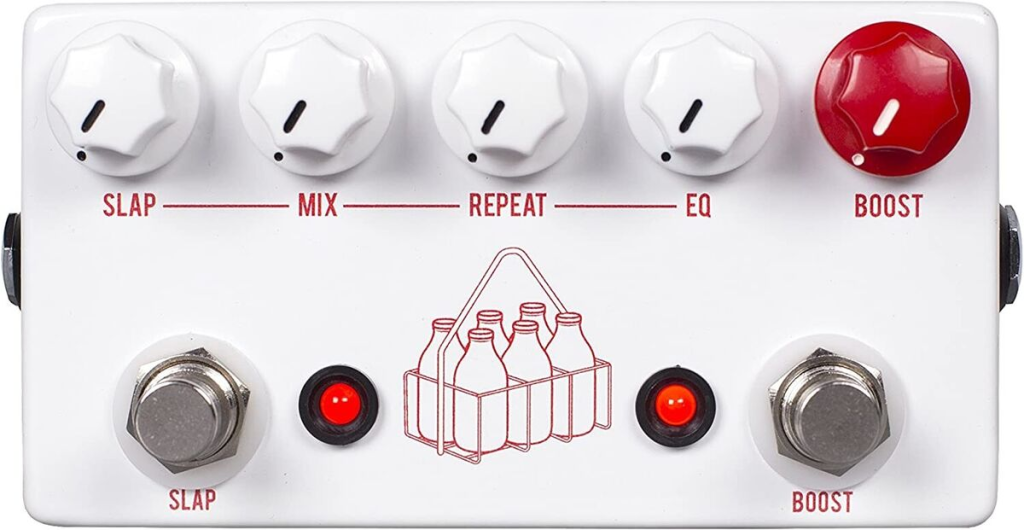
Slap delay began in the tape days, back when every studio had two tape machines:
- A multitrack tape machine (often 2-inch, sometimes 1-inch)
- A two-track machine used to print the final mix for mastering
The two-track machines were originally quarter-inch, later evolving into half-inch tape. These machines weren’t just for printing mixes—they became creative tools.
The slap delay was never a plugin concept. It was a physical reality.
Building an Endless Tape Loop
The classic slap delay came from a hands-on, mechanical setup.
Here’s how it worked:
- Take a 20–30 foot piece of tape
- Shorter tape = tighter delay
- Splice it into an endless loop
- Thread the loop through the tape machine
- Run the tape outside the machine, around:
- One mic stand
- Back around another mic stand
- Feed it back through the tape machine’s electronics and heads
The result was a continuous loop of tape, physically moving through space.
One challenge:
Tape machines were designed to shut off when tape ran out, so engineers would tape down or disable that safety mechanism to keep the machine running indefinitely.
Understanding the Tape Heads and Delay Time
A tape machine had three heads:
- Erase head
- Record head (Sync head)—records the signal
- Playback head (repro head)—plays back the signal
The magic came from the physical gap between the record head and the playback head.
That gap created the delay.
What determined the delay time?
- Tape speed
- Physical distance between heads
Typically, this produced delays in the range of:
- 70–120 milliseconds
That timing became the foundation of what we now recognize as a classic slap.
Routing the Slap Into the Mix
The signal flow was straightforward but deliberate:
- Send the source signal (usually a vocal) to the tape machine
- Monitor the playback (Repro) head
- Bring the output back into:
- A stereo channel
- Or a return channel on the console
Now the delay exists because you’re monitoring the playback head, not the record head.
The delay wasn’t calculated. It was physically unavoidable—and that’s why it worked.
Modern Slap Delay Timing Philosophy
Today, delays are instant. Pull up a plugin, dial in milliseconds, and done.
But the philosophy hasn’t changed.
Slaps usually live in the range of
- 60–75 ms
- Up to about 125 ms
Some numbers work. Some don’t.
One critical rule:
- Do not sync slap delays to musical subdivisions
Avoid:
- 32nd notes
- 64th notes
- Anything rhythmically locked
Once it lands on the beat, it stops being a slap and starts becoming an echo.
A slap should feel like space—not rhythm.
A Classic Stereo Slap Example
A simple but effective stereo approach:
- Left side: ~67 ms
- Right side: ~79 ms
This creates width without drawing attention to itself.
Dry vocal:
You changed my mind…
With a slap:
You changed my mind…
The difference isn’t obvious at first—but the vocal lifts, opens, and steps forward.
Moving Beyond the Basic Slap
A basic slap works—but it can be boring.
That’s where experimentation comes in.
By using modern plugins, it’s possible to layer characteristics that were impossible in the tape era:
- Reverb
- Distortion
- Doubling
- Pitch variation
- Phase movement
This transforms a simple slap into something alive.
Multi-Mono Slaps and Independent Control
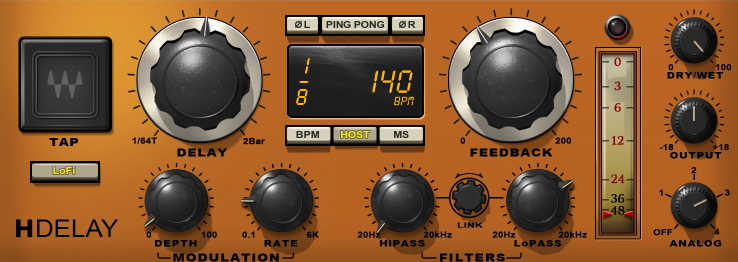
By running delay plugins in multi-mono, you gain independent control over the left and right sides.
If multi-mono isn’t available, the same result can be achieved by:
- Using two auxiliary tracks
- Assigning different delay plugins or settings to each side
This opens the door to asymmetry, which is where the interest lives.
Designing Two Complementary Slaps
Slap A (One Side)
Characteristics:
- More doubling
- Slight modulation
- Minimal feedback
- No dry signal
- Smooth sustain
Slap B (Other Side)
Characteristics:
- More echo
- Less doubling
- Shorter delay
- More saturation
- Less sustain
On their own, each slap sounds fine.
Together, something unexpected happens.
Mathematically, it’s unclear. Sonically, it just works.
The Power of Combined Slaps
When both slaps are active simultaneously:
- The vocal gains width
- The image feels deeper
- The effect feels complex but natural
- Nothing jumps out as “delay.”
This is not about hearing the slap.
This is about feeling the result.
Why Modern Plugins Change Everything
In the tape days, pulling this off would have required:
- Multiple tape machines
- Multiple tape loops
- Additional outboard gear
- More routing complexity
Modern plugins compress all of that into a single environment.
One plugin can replace:
- Five separate processors
- Multiple physical constraints
Yet the creative mindset remains the same.
Where This Technique Works Best
This approach isn’t limited to vocals.
It translates beautifully to:
- Guitars
- Synths
- Keyboards
- Ambient textures
- Background elements
Anywhere you want:
- Size
- Dimension
- Movement
- Density without clutter
Experimentation Is the Point
There is no single “correct” slap.
The process is:
- Try different delay times
- Avoid rhythmic locking
- Contrast left and right
- Combine textures
- Listen inside the mix—not solo
When placed correctly, the track doesn’t get louder—it gets bigger.
And that’s where slap delays stop being an effect and start becoming part of the sound itself.