
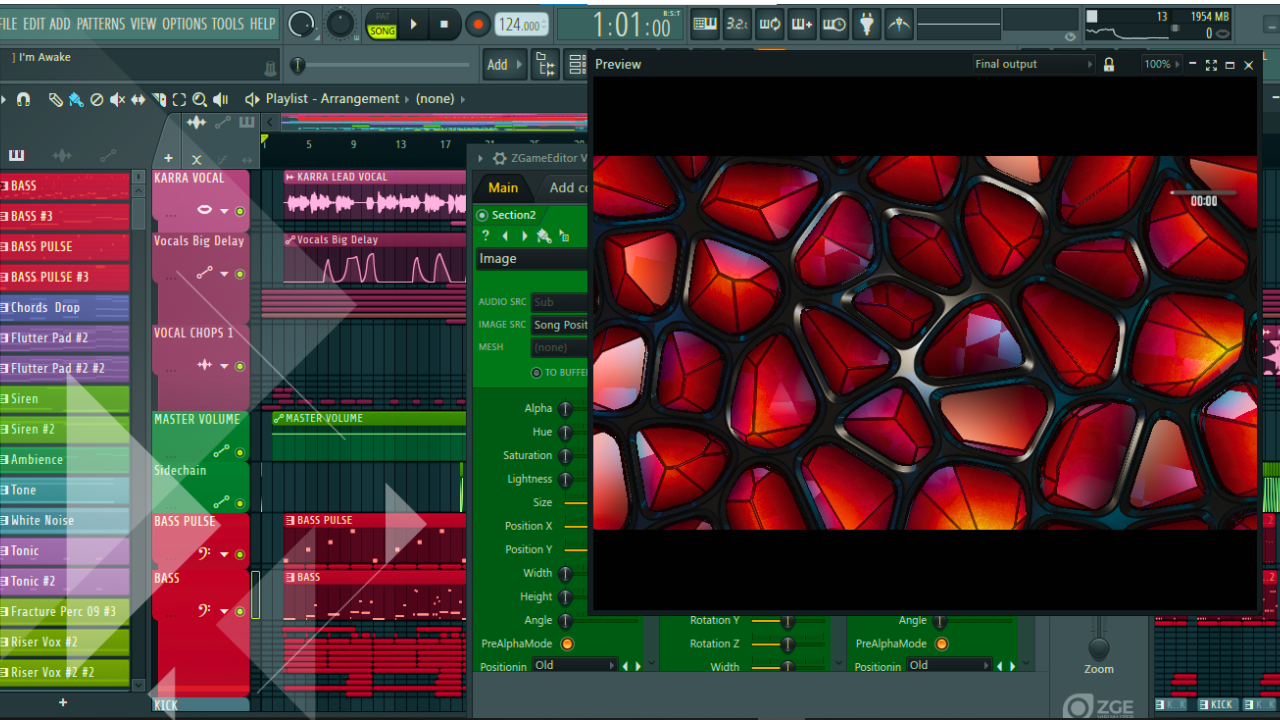
How to Burn Deep Emotion/Feelings Into your Music
When making music, there’s nothing more important than how it makes you feel.
The goal isn’t technical perfection. The goal is translating emotions you can’t quite describe into sound. The following ideas break down how that happens—how feelings become texture, rhythm, space, and movement.
These principles apply across genres. The tools may change, but the emotional effect remains the same.
The Role of Sound Selection in Emotion
Sound Choice Shapes Mood Immediately
The sounds you choose can greatly enhance—or completely undermine—the feeling you’re trying to evoke.
Low-pitched sounds tend to feel:
- Sadder
- Darker
- Heavier
A chord played with a darker timbre immediately carries more weight.
Now take that same chord and play it with a brighter sound. The emotion shifts:
- Happier
- More uplifting
- More open
The notes haven’t changed. The feeling has.
Sound selection is emotion before harmony even enters the conversation.
Chords: Major, Minor, and Everything Between
It Goes Deeper Than Happy and Sad
A major chord typically feels happier.
A minor chord often feels more serious or emotional.
But it doesn’t stop there.
There’s a common idea that each musical key carries its own vibe—its own emotional character. For example:
- C major is often described as happier
- D minor is often described as more serious
Yet in practice, the scale itself matters less than how it’s used.
What truly shapes emotion is:
- Where the chords are placed
- How long they last
- What happens inside the scale
Simplicity Can Be Powerful
Two Chords Are Sometimes Enough
Throughout the example being discussed, the chord progression is extremely simple—only two chords.
That simplicity is intentional.
Why?
Because rhythm and placement completely change how those chords feel.
Consider the same progression played in different ways:
- Chords spaced out with silence between them → dramatic, emotional
- Chords hitting every bar → less tension, less impact
- Chords chopped rhythmically → more upbeat, more energetic
The rhythm of your chords can matter more than the chords themselves.
Melody Placement: Let Silence Do the Work
Impact Comes From Timing
One of the most effective tools for emotional impact is where the melody appears.
In this case, the melody starts after the first chord stops playing.
That space—where nothing else is happening—creates contrast.
Because of that:
- The melody feels louder
- The melody feels more important
- The melody carries more emotion
Using Resolution and Contrast
In the second half of the melody:
- Additional notes are introduced
- The phrase resolves
- Contrast is created between the beginning and the end
This subtle evolution keeps the listener emotionally engaged without overwhelming them.
Drums: The Emotional Backbone
Drums Can Redefine the Entire Track
Drums are arguably more important than chords or melodies when it comes to feel.
Why?
Because you can change the entire genre just by changing the drum pattern.
The same musical idea can feel:
- Deep and introspective
- Deep but ready for a club
All without touching the harmony.
A Simple Rule to Follow
- Slower drums → more dramatic, emotional
- Faster drums → more upbeat, energetic
Rhythm dictates how the body responds, and emotion follows closely behind.
Imperfection Is What Makes Music Feel Alive
Avoiding the “Robotic” Sound
When music is made entirely on computers, it’s easy for everything to sound:
- Overly perfect
- Mechanical
- Lifeless
When every note hits at the same time, with the same length and velocity, the emotion disappears.
Humanizing Instruments
Take a guitar, for example:
- It’s impossible to strum all strings at once
- Each string is hit with a slightly different force
If a virtual instrument plays everything perfectly aligned, it stops sounding like a guitar—and starts sounding like something artificial.
To fix this:
- Slightly offset note timings
- Vary velocities
- Change note lengths
The same principle applies to pianos and all melodic instruments.
Those small inconsistencies are what make music feel human.
Using the World Around You
Real Sounds Add Real Emotion
Adding elements from real life is one of the easiest and most effective ways to introduce emotion.
Examples include:
- Ocean sounds
- Birds
- Environmental textures
These sounds immediately place the listener in a space.
In this case, ocean ambience was chosen because it naturally reinforces the emotional tone of the music.
Vocals: The Strongest Emotional Tool
Why Vocals Work So Well
Adding your own vocals—even simple ones—is often the best way to add feeling.
Vocals aren’t restricted like samples or virtual instruments. You can put exactly what’s in your head into the music.
And you don’t need to be a singer.
Layering for Depth
When layering vocals:
- Don’t make every take identical
- Combine higher vocal layers with a natural voice
For example:
- A few higher vocal takes
- One regular vocal take
Together, they create richness and emotion that a single track can’t.
Making Vocals Work (Even If You Can’t Sing)
To make vocals sit nicely in the track:
- Use a tuner to correct pitch
- Add reverb and turn it down so it sits in the background
- Apply a filter to push it further back
Even subtle vocals add an emotional layer that’s impossible to replicate with instruments alone.
Nothing adds emotion like the human voice—even when it’s barely heard.