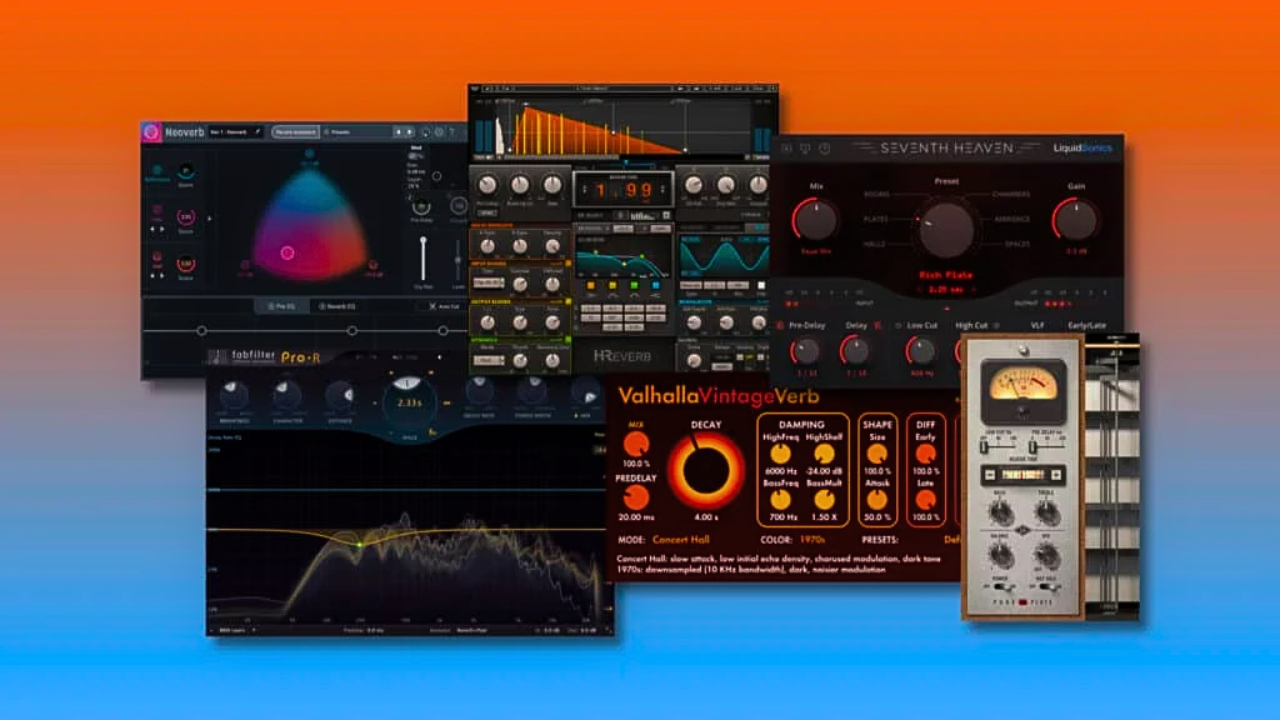
Reverb is often one of the biggest conceptual barriers for people learning to mix. Compression and equalization tend to feel easier to grasp because their effects are immediate and clearly audible.
Reverb, on the other hand, works in a more subtle, contextual way. Its effectiveness depends not only on its settings, but on tempo, pace, tone, space, density, and placement within the mix.
Understanding how to select a reverb and how to approach its settings requires stepping back and thinking about sound as space, not just effect. Several interrelated factors shape that decision-making process, and managing them deliberately makes the difference between clarity and chaos.
Tempo, Style, and Musical Context
One of the most influential factors in reverb selection is tempo. The speed of the track, combined with the overall musical style, immediately narrows down what types of reverbs make sense.
Style Shapes Space
Different styles of music inherently suggest different approaches to space:
Classical music
The acoustic space is part of the sound
Traditionally recorded with live musicians in real rooms
Microphone placement and room acoustics define character
Each orchestra and hall produces a unique sonic identity
Jazz
Reverb creates the feeling of a live performance happening in front of the listener
Space supports realism and intimacy
Ballads
Vocal reverbs become critically important
Drum reverbs help establish emotional openness and depth
Faster, aggressive styles (punk, dense rock)
Tighter, smaller spaces
Room sounds over long reverbs
Focused and controlled decay
Stylistic approach determines not only which reverbs you choose, but how much—if any—you should use.
Tempo vs. Pace: A Crucial Distinction
Tempo influences reverb time, but pace matters just as much.
A track might technically be fast (e.g., 160 BPM)
But a halftime feel creates a much slower perceived pace
Individual instruments may play sparsely even at high tempos
Instrument Pace Matters
The rate at which an instrument produces sound determines how long its reverb can be:
Busy, fast parts → short, tight reverbs
Sparse, intermittent parts → longer reverbs can work
A two-second reverb on an eighth-note guitar part will almost always turn into a washy mess.
Reverb Types and Their Characteristics
Each reverb type brings its own behavior and sonic character. Understanding these differences helps avoid arbitrary choices.
Common Reverb Types
Rooms
Short, linear, predictable
Ideal for fast tempos
Excellent for control and realism
Chambers
Small physical spaces with reflective materials
Feel larger than they are
Sit between rooms and halls
Halls
Longer decay
More complex reflections
Multiple waves of reverberant energy
Churches / Cathedrals
Extremely reflective
Long reverb times
Many layers of decay
Best for very slow tempos or isolated sounds
Springs
Highly characterful
Nonlinear, “boingy”
Tonally distinct
Common on guitars
Plates
Linear but resonant
Frequency-specific tonal coloration
Excellent for adding depth to otherwise flat sounds
Each of these choices affects how the reverb behaves over time and how it colors the sound.
Tone Matching and Sonic Contrast
One of the most misunderstood aspects of reverb is tone matching. The reverb should not simply mirror the sound it’s applied to.
Why Contrast Matters
If the reverb is sonically too similar to the dry signal:
It becomes attached to the source
Separation disappears
The reverb feels invisible or ineffective
“I don’t hear the reverb” often means there isn’t enough contrast.
Practical Examples
Generic snare drum
Plate reverb adds resonant depth
Enhances pitch and character
Bright vocal
Warm hall reverb adds body
Softens harshness
Warm, rich vocal
Brighter reverb increases clarity
Highlights detail through contrast
This works the same way visual contrast defines space and texture in a room.
Reverb Time and the RT60 Misconception
Reverb time is often misunderstood because it’s based on RT60, the time it takes for sound to decay by 60 dB.
In real mixes:
Dynamic range is far smaller
You rarely hear the full decay
A “2-second reverb” may only be audible for a fraction of that time
Managing Reverb Time Effectively
Shorter reverbs with compression
Raise the audible tail without extending decay
Prevent long tails from clouding the mix
This approach preserves clarity while maintaining presence.
Space, Density, and Placement in the Mix
Reverb doesn’t exist in isolation—it occupies real estate in the mix.
Dense vs. Open Mixes
Dense mixes require careful placement
Wide stereo reverbs can consume space quickly
Mono reverbs often work better than expected
Stereo isn’t bigger if you can’t hear it.
Strategic Placement Techniques
Use mono reverbs for guitars panned left or right
Leave center space open for vocals and drums
Match reverb placement to instrument position
This allows multiple reverbs to coexist without masking each other.
Creative Spatial Distribution
Reverberant energy can be positioned deliberately:
Split reverbs left and right for different sections
Localize horn or string reverbs instead of spreading them wide
Use panning and width to balance space
This turns reverb into a spatial design tool, not just an effect.
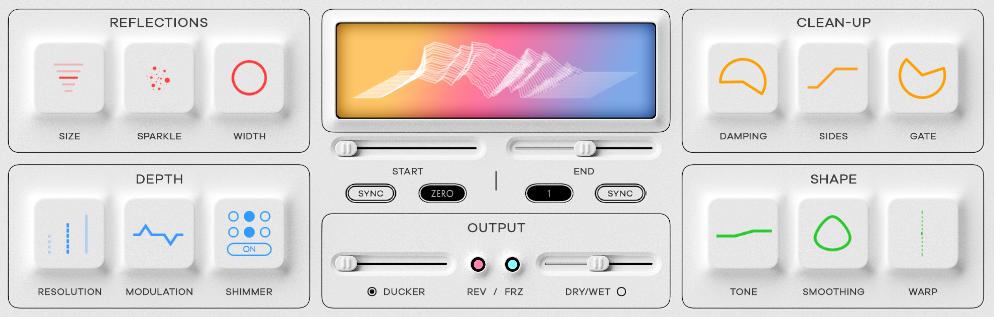
Width Control and Side Energy
For wide instruments like synths:
Remove reverb energy from the center
Push it toward the sides
Create space for lead elements
This technique carves room without thinning the sound.
When Not to Use Reverb
Reverb should never be applied by default.
Some sounds work best dry
Many samples already contain ambience
Adding reverb may reduce impact instead of enhancing it
Intentional restraint is part of effective mixing.
Early Reflections: Depth Without Wash
Early reflections are the first reflections off surrounding surfaces. They define perceived space before reverb builds up.
Why Early Reflections Matter
They tell your brain how big a space is
They work on a millisecond scale
They can create depth without audible reverb
Depth you feel but don’t hear is often early reflections.
Practical Use
Remove reverberant tails
Use only early reflections
Adjust size and density
This creates a three-dimensional environment without clutter.
Layering Space Intelligently
Early reflections can act as a foundation:
Create space first
Layer reverberant energy on top
Allow vocals and drums to coexist naturally
This approach makes complex mixes feel cohesive instead of crowded.
Direction Before Settings
Before touching a plugin:
Listen to reference material
Identify wet vs. dry balances
Notice depth without obvious reverb
Direction should guide decisions—not presets.
Practical Decision Framework
When choosing and setting reverb, consider:
Style and tempo
Instrument pace
Tone and contrast
Reverb type
Reverb time and compression
Pre-delay for separation
Stereo vs. mono placement
Early reflections vs. full reverb
Overall mix density
Every choice affects how space is perceived.
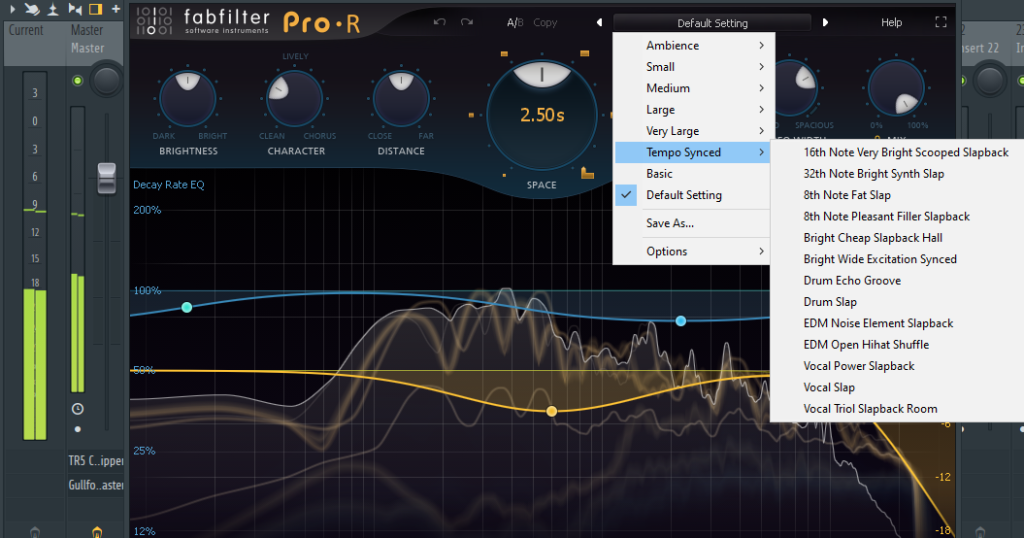
Pre-Delay and Depth Control
Pre-delay is one of the most powerful depth tools available.
No pre-delay → reverb feels distant
Short pre-delay → reverb separates from source
Longer pre-delay → sound stays forward, space moves back
Pre-delay defines where the sound sits in the depth field.
Reverb is not about adding size—it’s about shaping space, contrast, and perception. Every decision should serve clarity, depth, and balance within the mix.